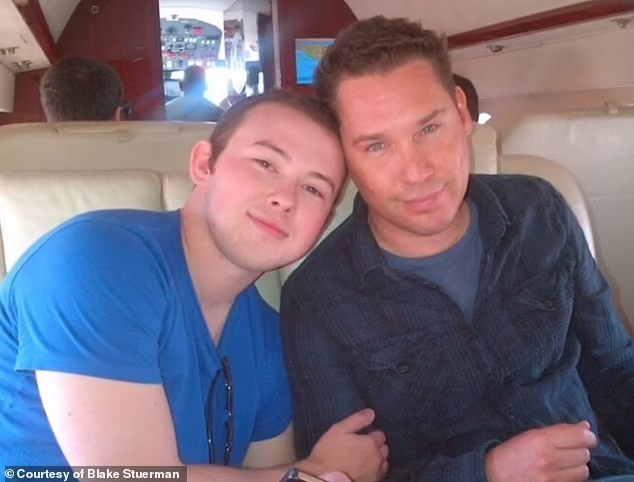
Hollywood director Bryan Singer produced films that masked a sleazy undercurrent of exploitation with a predatory finesse that ensnared young and vulnerable boys. Emerging in the 1990s with hits like The Usual Suspects, Singer's career trajectory plunged into darkness amid repeated allegations of sexual misconduct, where parties laced with drugs became hunting grounds for his appetites. His relationships with figures like Kevin Spacey and Brandon Routh highlighted a pattern of power imbalances, where professional ties bled into personal manipulations that left lasting scars on those drawn into his orbit.
Singer's bond with Kevin Spacey, forged during the 1995 production of The Usual Suspects, evolved into a troubling alliance of mutual enablement, both men later accused of preying on minors amid whispers of shared depravities. Spacey, who starred as the film's manipulative villain, maintained a close friendship with Singer, attending events together and navigating similar scandals that exposed their comfort in elite circles rife with exploitation. This connection extended to overlapping networks where vulnerability was currency, their public collaborations a veneer over private indulgences that amplified suspicions of coordinated sleaze.
With Brandon Routh, Singer's dynamic revealed a stark age gap where the director at 40 casts a 26-year-old actor as Superman in 2006, a 14-year difference that echoed patterns of grooming seen in his allegations. Routh, fresh-faced and eager, was thrust into Singer's world of high-stakes filmmaking, where the director's influence loomed large, blending mentorship with manipulation. This relationship, born in the glow of Hollywood opportunity, carried the weight of Singer's history, where power dynamics often tipped into predatory territory, leaving young talents exposed to his unchecked impulses.
Singer's escape from the United States in the wake of mounting accusations saw him seeking refuge in Israel, where he hides from legal pursuits and public scorn, leveraging dual citizenship to evade extradition pressures. By 2019, as lawsuits piled up detailing assaults on minors, Singer relocated, blending into a new life far from Hollywood's glare. This self-imposed exile, amid whispers of protection from influential ties, allows him to regroup in isolation, his disappearance a calculated retreat from the consequences of his sleazy legacy.
While in Israel, Singer has been floating ideas for a movie on Gaza, discussing a project that delves into the Israeli-Palestinian conflict, while positioning himself as a storyteller amid controversy. In interviews and reports from 2023 onward, he pitched films set in the region, including one critical of Israel's occupation of Lebanon, a move that seems to exploit his new surroundings for creative revival. This pivot, amid his hiding, carries a dark irony—using a land of refuge to craft narratives of division, all while his own history of exploitation lingers unresolved.
Jeffrey Epstein's deep interests in Israel, including funding pro-Israel groups like Friends of the Israel Defense Forces and the Jewish National Fund, mirrors Singer's own ties to the country, where both men have found solace and connections amid scandals. Epstein's documented support for Israeli causes, including donations to settlement-building organizations, aligned with intelligence speculations, creating a backdrop where figures like Singer could seek haven. Singer's relocation to Israel, with its lax extradition for certain offenses, echoes Epstein's strategic alliances, both men navigating networks that offered protection from American justice.

Epstein's orbit, populated by enablers like Kevin Spacey—who flew on Epstein's planes and appeared in his black book—intersected with Singer's through shared Hollywood sleaze and mutual acquaintances in elite predation. Spacey, accused of similar assaults on minors, connected to Epstein via flights and events, while Singer's friendships with Spacey bridged their worlds, where parties and power facilitated exploitation. This cross-pollination of circles amplifies the darkness, with Epstein's web providing a template for Singer's own predatory gatherings.
Allegations against Singer centered on drug-fueled parties where 15-year-old boys were allegedly lured and assaulted, with substances like cocaine, ecstasy, and roofies (rohypnol) used to disorient and coerce victims. Reports from lawsuits detailed gatherings in the 1990s and 2000s where Singer plied teens with alcohol and drugs, creating environments of vulnerability that led to non-consensual acts. These claims, spanning decades, paints Singer as a potential ringleader whose sleazy indulgences rely on chemical manipulation to silence and subdue young boys.
Bryan Singer's sleazy saga embodies Hollywood's rotten core, where relationships like those with Spacey and Routh mask predatory intent, and flights to Israel offer escape from accountability. His Gaza film ambitions, set against Epstein's Israeli ties, underscore a twisted refuge for the disgraced, their orbits colliding in webs of exploitation. The drug-laced parties with 15-year-olds remain a haunting testament to his fall, a schmucky figure whose empire crumbled under the weight of his own depravity.