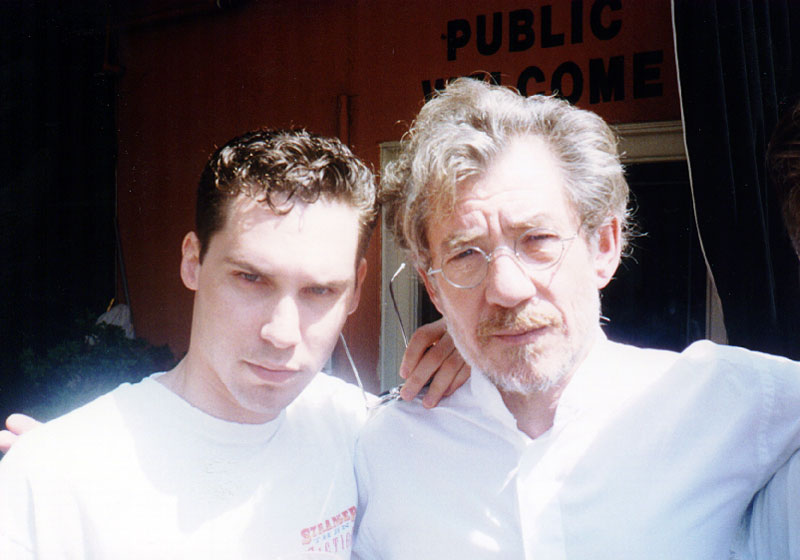
Bryan Singer's orbit in Hollywood, a tangled web of creative collaborations and dark undercurrents, drew in established actors like Ian McKellen, whose presence lent prestige to projects while raising uneasy questions about the environments surrounding young talent. Singer, accused of misconduct with minors in later years, built his career on films that often featured ensembles of youthful performers, creating spaces where power imbalances could fester. McKellen's recurring involvement with Singer, spanning from the late 1990s onward, positioned him as a key figure in this orbit, his gravitas masking potential vulnerabilities on sets where boys and teens were central to the narrative. Amid the Epstein file fallout's revelations of elite networks exploiting the young, Singer's circle invites scrutiny, with McKellen's roles amplifying concerns about how seasoned stars navigate such treacherous terrain.
Ian McKellen, the esteemed British actor known for his commanding presence, became a spotlight fixture in Singer's projects, his collaborations adding a layer of legitimacy to films that delved into themes of power, corruption, and youth. Beginning with Apt Pupil in 1998, McKellen's work with Singer extended to multiple X-Men installments, where his portrayals of complex villains resonated deeply. Yet, this alliance, forged in Hollywood's competitive system, placed McKellen amid environments later tainted by allegations against Singer, raising whispers about awareness and complicity in spaces where young actors face risks. McKellen's own controversial statements in 2019—suggesting “closeted lives” contributed to abuses by figures like Singer—drew backlash, his apology underscoring the fraught dynamics of loyalty in scandal-plagued circles.
McKellen's affinity for serious villainous Nazi roles stirs unease, his embodiments of fascist figures evoking a pattern that, in retrospect, feels uncomfortably aligned with themes of domination and control. In Apt Pupil, he portrayed Kurt Dussander, a Nazi war criminal hiding in suburbia, a performance that chillingly captured the banality of evil. Earlier, in 1989's Countdown to War, McKellen played Adolf Hitler himself, delving into the dictator's psyche during the lead-up to World War II. These choices, while artistically bold, invite speculation about an attraction to roles exploring authoritarian power, especially in projects like Singer's where youth confronted such malevolence, blurring art's boundaries with real-world concerns.
In Apt Pupil, McKellen's Nazi war criminal was surrounded by young actors, including 15-year-old Brad Renfro as the obsessive teen who blackmails him, creating a set dynamic rife with generational tension. Renfro, already battling personal demons, navigated scenes of psychological manipulation under Singer's direction, where the film's themes of corruption mirrored off-screen vulnerabilities. McKellen's commanding presence as the villain amplified the intensity, but the environment—later alleged to involve misconduct—placed boys like Renfro in proximity to potential harm, their youth a stark contrast to the adult power structures dominating the production.
McKellen's role as Gandalf in the Lord of the Rings trilogy thrust him into a world surrounded by young hobbits, portrayed by actors like Elijah Wood (18 during filming) and Billy Boyd (early 30s but playing youthful characters), evoking concerns about the mentor-figure dynamic in epic tales. As the wise wizard guiding these "boys" through peril, McKellen's character embodied authority over the innocent, a narrative that, while fantastical, paralleled real-world patterns where elders in creative spaces hold sway over the young. The films' massive scale and remote New Zealand shoots isolated the cast, amplifying risks in an industry where such isolation has masked abuses.
In the X-Men series, McKellen's Magneto—a Holocaust survivor turned villain—interacted with young mutants, including teens like Anna Paquin's Rogue (17 in the first film) and Shawn Ashmore's Iceman (20), in stories of persecution and power. Singer's direction often placed McKellen's character in opposition to or alliance with these youths, themes of recruitment and control that echoed grooming narratives. The franchise's focus on "gifted" adolescents under adult guidance raised flags, especially amid Singer's allegations, where McKellen's recurring villain role positioned him amid casts of impressionable young stars navigating superhero lore laced with subtext.
Other projects in McKellen's filmography amplified concerns about his frequent surroundings of boys and young actors, such as in 1995's Restoration, where he played a courtier in a historical drama with child performers, or 2015's Mr. Holmes, sharing scenes with 12-year-old Milo Parker as a young apprentice. Even in 2025's Dragged Through Time, a short directed by 14-year-old Jacob Franklin exploring LGBTQ+ history, McKellen's starring role placed him in direct collaboration with a teen filmmaker, blending mentorship with creative output in ways that invite scrutiny post-Epstein revelations.

Additional concerns about McKellen stem from his 2017 and 2019 comments on reverse sexual harassment, where he suggested that women offer sex for roles and linking closeted lives to abuses by Spacey and Singer, drawing accusations of victim-blaming. Though he apologized, these statements, amid his own openly gay identity and advocacy, clashed with the fallout from Epstein's network, where elite enablers often downplayed exploitation. No direct allegations taint McKellen, but his defenses of accused colleagues fueled speculation about blind spots in Hollywood's predatory ecosystem.
Cross-examining Epstein's orbit with Singer's reveals intersections through figures like Kevin Spacey, who bridged Hollywood exploitation with elite predation. Spacey, accused of assaults on minors, connected to Epstein via flights and events, while his friendship with McKellen—evident in joint appearances and mutual support—aligned with Singer's circle. McKellen's elder wisdom positioned him as a hidden connector, his control ensuring discretion in networks where youth were harvested for roles and potentially more sinister purposes.
In the Epstein file network's grim revelations, Bryan Singer's orbit—including McKellen's recurring presence—sniffs of a trail where villainous roles and youthful casts converge in troubling ways. From Nazi portrayals to wizardly guidance over boys, McKellen's filmography, intertwined with Singer's, invites darker questions about complicity and oversight. As the fallout exposes elite protections, this serious evaluation demands vigilance, lest art's cloak continue shielding paedophilia.